Computer Languages
Modular Programming and Functions
What does Modular Programming mean?
· Some
programs might have thousands or millions of lines and to manage such programs
it becomes quite difficult as there might be too many of syntax errors or
logical errors present in the program, so to manage such type of programs,
there is a concept of modular programming.
· Modular
programming is the process of subdividing a computer program
into separate sub-programs.
·
A module
is a separate software component. It can often be used in a variety of
applications and functions with other components of the system.
· Each
sub-module contains something necessary to execute only one aspect of the
desired functionality.
· Modular
programming emphasis on breaking of large programs into
small problems to increase the maintainability, readability of the code and to
make the program handy to make any changes in future or to correct the errors.
Why do we
use Functions in C language?
What are advantages of using Modular
Programming Approach?
· Ease
of Use: This approach allows simplicity, as rather than
focusing on the entire thousands and millions of lines code in one go we can access it in the form of modules. This allows ease
in debugging the code and prone to less error.
· Reusability:
It allows the user to reuse the functionality with a
different interface without typing the whole program again.
· Ease
of Maintenance: It helps in less collision at the time of
working on modules, helping a team to work with proper collaboration while
working on a large application.
Functions
·
In c Function, a large program is
divided into the basic building blocks known as function.
·
The function contains the set of
programming statements enclosed by {}.
·
A function can be called multiple
times to provide reusability and modularity to the C program.
· In
other words, the collection of functions creates a program. The function is
also known as procedure or subroutine in other programming
languages.
Function
Aspects
There are three aspects of a C function.
·
Function declaration A
function must be declared globally in a c program to tell the compiler about
the function name, function parameters, and return type.
·
Function call Function can be
called from anywhere in the program. The parameter list must not differ in
function calling and function declaration. We must pass the same number of
functions as it is declared in the function declaration.
·
Function definition It
contains the actual statements which are to be executed. It is the most
important aspect to which the control comes when the function is called. Here,
we must notice that only one value can be returned from the function.
The syntax of creating
function in c language is given below:
return_type function_name (data_type parameter...)
{
//code to be executed
}
Types of Functions
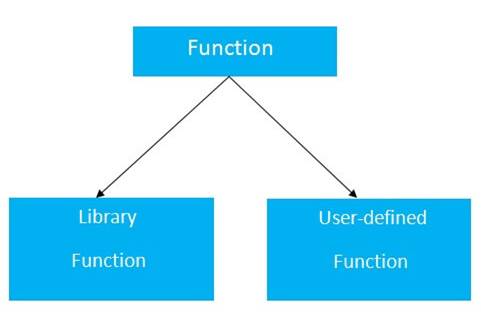
There are two types of functions in C programming:
·
Library
Functions: are the functions
which are declared in the C header files such as scanf(), printf(),
gets(), puts(), ceil(), floor() etc.
·
User-defined
functions: are the functions which are created by the C programmer,
so that he/she can use it many times. It reduces the complexity of a big
program and optimizes the code.
Return Value
A C function may or may not
return a value from the function. If you don't have to
return any value from the function, use void for the return type.
Example
Let's see a simple example of C function that
doesn't return any value from the function.
void Display()
{
printf(“Welcome”);
}
Computer Languages