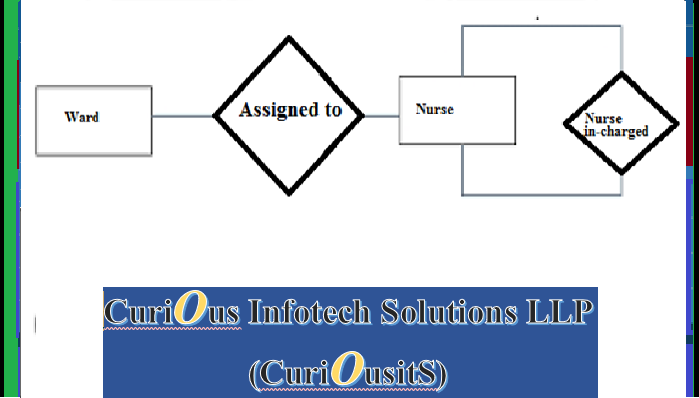
A recursive association connects a single class type (serving in one role) to itself (serving in another role).
Example:
Admin staffs are in-charge admitting inpatient to the hospital.
Several nurses work in each ward and one of them is in charge of the ward.
Admin staffs are in-charge admitting inpatient to the hospital.
Several nurses work in each ward and one of them is in charge of the ward.
Worker works for Manager
and Worker and Manager
both are 2 roles of Employee

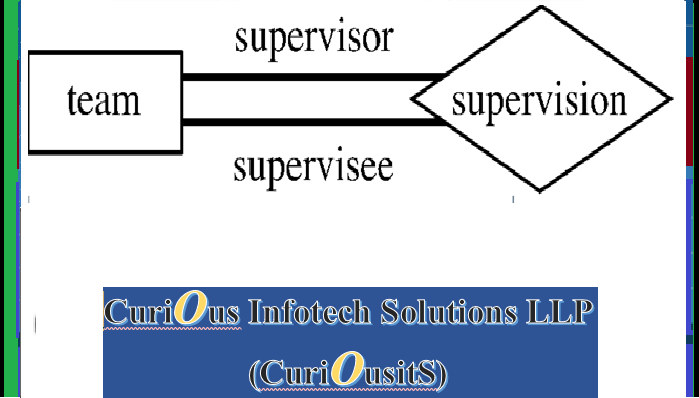
One team is assigned the task of supervising the other teams.
This supervisor team makes sure that each team records its portion of the data.
The supervision relationship is a recursive relationship because the same entity, a particular team, participates more than once in the relationship, as a supervisor and as a supervisee.
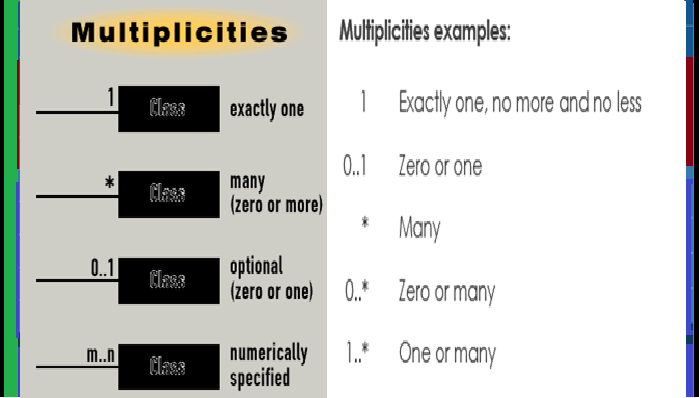
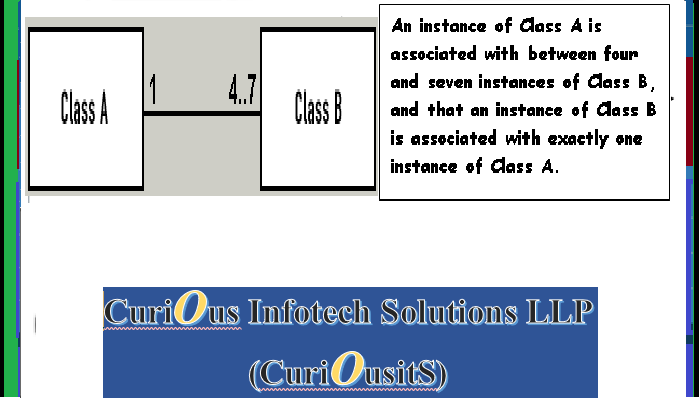
Multiplicity defines how many objects participate in a relationship and it is the number of instances of one class related to one instance of the other class.
Place multiplicity notations near the ends of an association.
These symbols indicate the number of instances of one class linked to one instance of the other class.
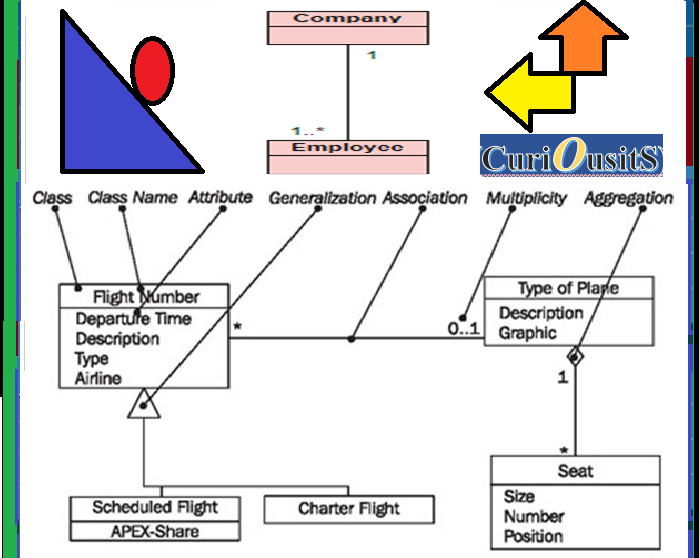
one company will have one or more employees, but each employee works for one company only.
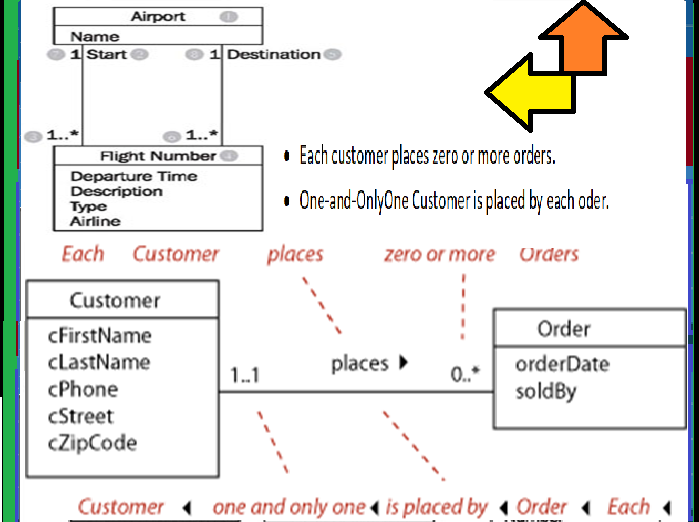
Make Class Diagram:
• An airport is a start (location) for one or more flight numbers.
• A flight number has as destination exactly one airport.
An association is assumed to be bidirectional,
which means that you can navigate from either class to the other one.
However, you can specify that navigation can only occur from one class to another by using a feathered arrow,
as shown in Figure:

Navigability arrows in the class indicate in which direction an association can be traversed and are based on the collaboration modeled in communication and sequence diagrams.
Establishing the navigation arrow on this association means that a Customer has access to his or her Password, but no one can in turn use a Password to identify a Customer.
Navigation is optional and indicates whether a class may be referenced from the other classes in an association.
If no arrows are present, associations are assumed to be navigable in all directions, and all classes involved in the association may reference one another.
Figure shows navigation arrows applied to an n-ary association. Given a worker, you can reference his work products and units of work to determine his utilization, but given a work product or unit of work, you are unable to determine its utilization by a worker.
Establishing the navigation arrow on this association means that a Customer has access to his or her Password, but no one can in turn use a Password to identify a Customer.
Navigation is optional and indicates whether a class may be referenced from the other classes in an association.
If no arrows are present, associations are assumed to be navigable in all directions, and all classes involved in the association may reference one another.
Figure shows navigation arrows applied to an n-ary association. Given a worker, you can reference his work products and units of work to determine his utilization, but given a work product or unit of work, you are unable to determine its utilization by a worker.
- Named associations can be given in any order, but if both positional and named associations are used in the same call, positional associations must occur first, at their normal position. Hence once a named association is used, the rest of the call must use only named associations.
- Use named parameter association in calls of infrequently used subprograms or entries with many formal parameters.
- Use named association when instantiating generics.
- Use named association for clarification when the actual parameter is any literal or expression.
- Use named association when supplying a non default value to an optional parameter.
- An association can have a name that indicates the nature of the relationship. If a name is present, there can also be a triangle that points in the direction in which you should read the name.
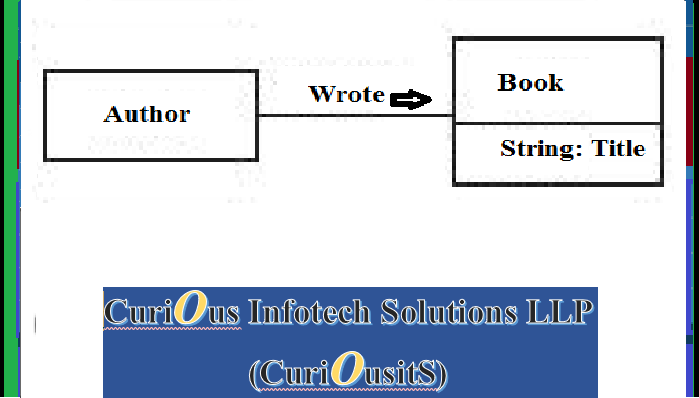

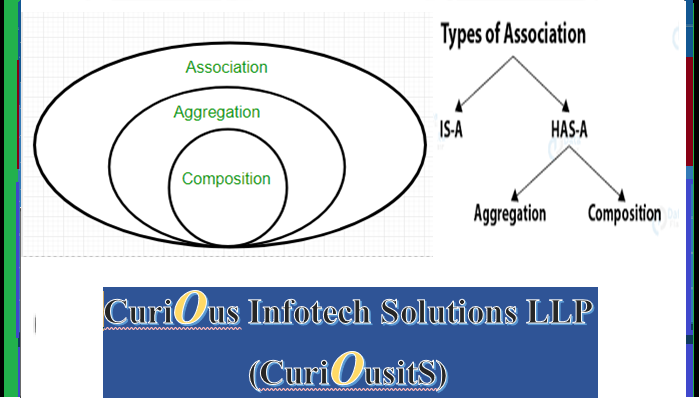 Association is relation between two separate classes which establishes through their Objects. Association can be one-to-one, one-to-many, many-to-one, many-to-many.